You touch a creature and force it to make a Constitution saving throw. On a failed save, the creature takes 2d10 Necrotic damage. On a successful save, the creature takes half as much damage.
Using a Higher-Level Spell Slot. The damage increases by 1d10 for each spell slot level above 1.
Casting Time: Action
Range: Touch
Components: V, S
Duration: Instantaneous
School: Level 1 Necromancy
Player’s Handbook 2024, pg. 289
Who can cast Inflict Wounds? Clerics, Divine Soul: Evil Sorcerers (XGtE, pg. 50) have Inflict Wounds on their class spell lists. Oathbreaker Paladins (DMG 2014, pg. 97) get Inflict Wounds for free and always have it prepared.
| Category | Score |
|---|---|
| Combat Rating | 3/10 |
| Exploration Rating | 1/10 |
| Social Rating | 1/10 |
| Raw Power | 3/10 |
| Versatility | 1/10 |
| Efficiency | 3/10 |
| Upcast Scaling | 3/10 |
Learn more about how my spell rating system works
Inflict Wounds 5e
For a decade, Inflict Wounds was the “Big Slap” of 5th Edition — risky, but capable of dealing a massive 3d10 damage at level 1. In the 2024 update, Wizards of the Coast completely redesigned (cough, nerfed) the spell.
Below, I analyze the math behind the rework (spoiler: the average damage went down), explain why the shift to Constitution saves is bad, and determine if this necromantic touch is still worth preparing.
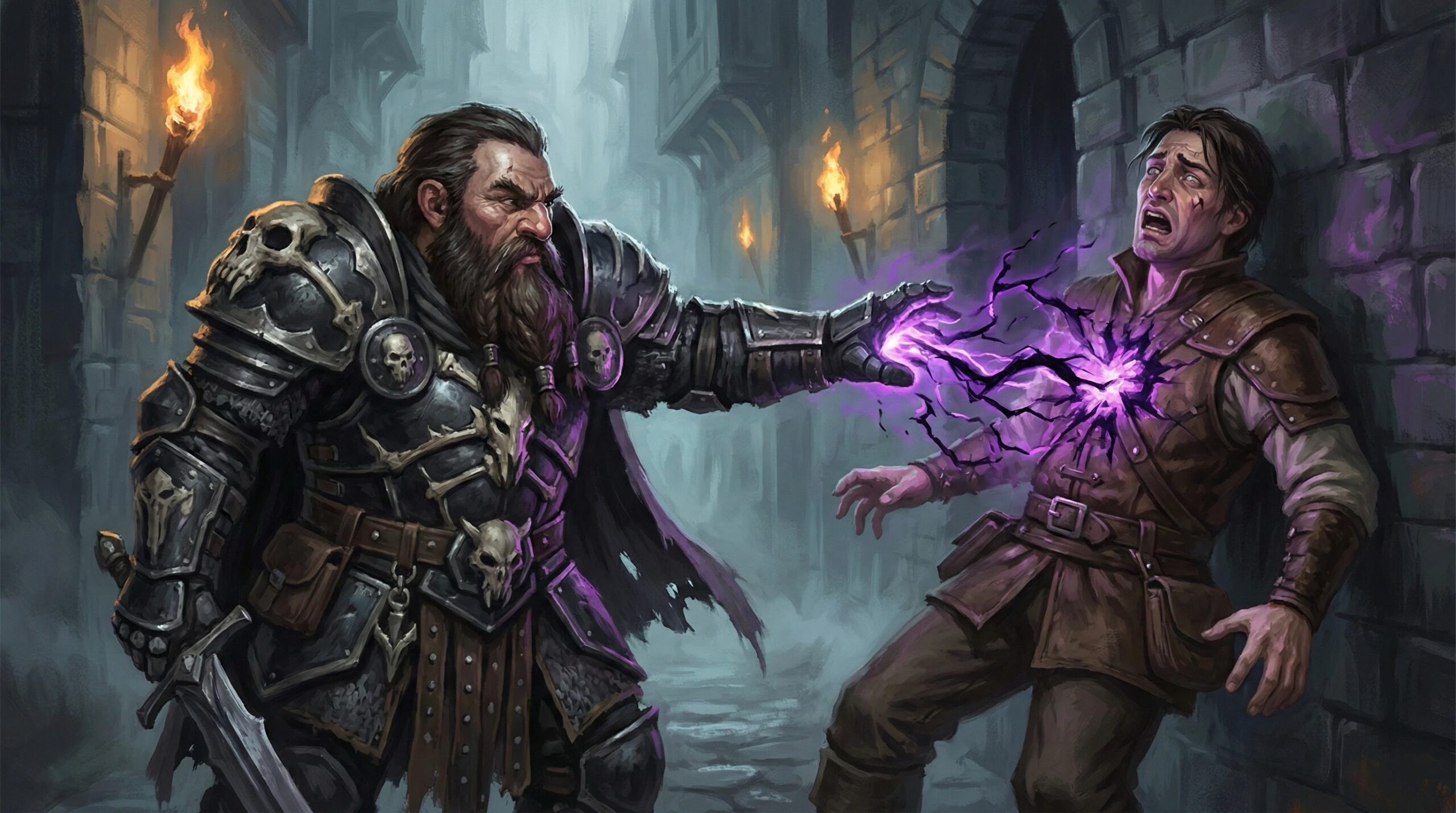
What Does Inflict Wounds Do in 5e?
Inflict Wounds forces a creature you touch to make a Constitution saving throw.
- On a failed save: The target takes 2d10 Necrotic damage (average 11).
- On a successful save: The target takes half that amount (average 5.5).
The spell scales by adding 1d10 damage (average 5.5) for every slot level above 1st.
How did Inflict Wounds change in the 2024 PHB?
Inflict Wounds received a massive mechanical overhaul in the 2024 Player’s Handbook. The spell was shifted from an Attack spell to a Save spell. The key changes are:
- No more attack roll: You no longer make a Melee Spell Attack. The target now makes a Constitution saving throw. This means the spell can no longer benefit from Critical Hits (PHB 2024, pg. 12). Also, Constitution is the highest average ability score among monsters in the 5e’s sourcebooks, so it has a lower chance to land full damage on the average enemy.
- Damage nerf: The base damage was reduced from 3d10 (16.5 average) to 2d10 (11 average).
- Reliability buff: In 2014, if you missed the attack, you did zero damage. In 2024, the target takes half damage on a successful save. This raises the “floor” of the spell.
Spell Rating: Inflict Wounds
Overall: 💀 F-Tier (Not Worth Your Spell Slot)
Contextual Performance (1-10)
-
Combat: 3/10. Cards on the table: I thought the 2014 version of Inflict Wounds. The 2024 revision is worse. It is now a “damage on save” spell, and targeting Constitution is generally poor optimization, as monsters tend to have high Constitution scores.
Even if we assume a 65% chance to hit on the old spell, and a 65% chance for an enemy to fail their Con save, the math still doesn’t look good:
Version Damage Dice Avg Result (Weighted) Crit Potential? 2014 Version 3d10 (16.5) 10.7 damage Yes (33 dmg) 2024 Version 2d10 (11) 9.1 damage No The math shows a clear drop in output. You lose about 1.6 damage per cast on average, and you lose the ability to Critically Hit entirely. And I’m being generous above: you’re probably 5 percentage points less likely to hit with the 2024 version of the spell because of the average enemy’s Con mod. That brings the average weighted damage down to 8.8. That’s a 15-18% damage reduction on a spell that was already meh to begin with (seriously, what were WoTC thinking with this one!?)
I’ll give the new Inflict Wounds points on one thing only: you gain consistency; you will never waste a spell slot for 0 damage.
-
Exploration: 1/10. No utility.
-
Social: 1/10. No social utility.
Core Metrics (1-10)
-
Raw Power: 3/10. 2d10 is standard for a 1st-level spell, but low for a melee-range spell. It is now mathematically equivalent to Guiding Bolt (which deals 4d6; average 14), but Guiding Bolt has a 120-foot range and grants Advantage on the next attack against the target. Inflict Wounds is strictly worse than Guiding Bolt in almost every scenario now.
-
Versatility: 1/10. It does damage. That is it. It has no secondary effect (like Guiding Bolt’s advantage or Ray of Sickness’s poison) and you need to be in melee range to use it; about as un-versatile as a spell comes.
-
Efficiency: 3/10. Half damage on a save is nice for a 1st-level spell. It ensures that your spell slot always contributes to the fight. But you’re much better off using your level 1 spell slot on Bless, Bane, Guiding Bolt, Healing Word, Command, Shield of Faith, Sanctuary, or Cure Wounds — the opportunity cost of casting Inflict Wounds makes it almost never worthwhile.
-
Upcast Scaling: 3/10. +1d10 per level is above-average scaling, keeping pace with other single-target spells, but Spirit Guardians (Level 3) remains the superior use of higher-level slots for Clerics.
Check out my comprehensive guide on the:
Playstyle and Synergy
-
Playstyle: This is a “finisher” spell. Because it guarantees damage (even on a save), it works for killing an enemy that is low on HP but has high AC (like a soldier in plate armor). You don’t need to roll to hit them; you just touch them and they die.
-
Party Synergy: None. Unlike the previous version, you cannot synergize with allies who knock enemies Prone or cast Hold Person. Since there is no attack roll, you cannot get Advantage, and you cannot Auto-Crit.
Player Tip: The “Constitution Trap”
Be very careful who you touch. Inflict Wounds targets Constitution. In DnD 5e (2024 included), Constitution is consistently the highest stat among monsters. Beasts, Giants, and Undead all have high Con bonuses.
If you use this on an Ogre, it will likely save. Only use this spell on “squishy” targets like enemy Wizards, Archers, or Rogues who likely have lower Constitution scores.
How to Use Inflict Wounds in 5e
Here are the optimized ways to utilize Inflict Wounds under the 2024 rules:
-
Use it against high-AC targets. Use this spell against enemies with high AC but low Constitution…which are admittedly rare. Because you don’t make an attack roll, their Armor Class is irrelevant. You bypass their plate mail entirely by forcing a Constitution save.
-
Guaranteed executions. If an enemy has 5 HP left, do not swing your mace (which might miss). Cast Inflict Wounds. Even if they succeed on the save, the “half damage” (average 5.5) will likely kill them. It is the most reliable way for a low-level Cleric to secure a kill.
-
Cast it via Find Familiar. If you’re able to pick up Find Familiar via a feat or a multiclass dip, this is a great way of getting around the Touch range limitation of Inflict Wounds. Plus, Find Familiar is just a great spell to have.
-
Be aware of necrotic resistances/immunities. Only 26 creatures are immune to necrotic damage and 34 are resistant — it’s mostly on creatures you’d expect — undead, ghosts, and the like.
One notable creature that’s missing from the list — zombies, who, for some reason, are not immune or even resistant to necrotic damage.
What Are the Rules for Inflict Wounds in 5e?
The rules for Inflict Wounds in the 2024 Player’s Handbook have simplified, but raised new questions:
-
Inflict Wounds cannot Crit. Because the spell now requires a Saving Throw rather than an Attack Roll, you cannot score a Critical Hit with it. This creates a “Anti-Synergy” with Hold Person. In 2014, holding casting Inflict Wounds on a a paralyzed target had advantage and dealt 6d10 damage if it hit.
-
Inflict Wounds cannot knock creatures unconscious. The rules for “Knocking Out a Creature” (PHB 2024, pg. 370) apply to melee attacks only; not spell saves (even for touch spells). That said, your DM may allow it.
Is Inflict Wounds 5e a Good Spell?
No, Inflict Wounds is not a good spell in 5e. It was a C-tier spell in 2014 (at best) that WoTC, perplexingly, decided to nerf in 2024. Sure, it had the potential to deal silly single-target damage at low levels, but no serious optimizers were building characters around Inflict Wounds.
If you’re a frontline Cleric, there’s maybe a case for having Inflict Wounds for situations when guaranteed damage is necessary low levels. Especially if it fits the flavor of a “dark Cleric” you’re trying to build.
But it’s outclassed by pretty much every other Level 1 Cleric spell. I didn’t recommend taking it in 2014, and I still don’t recommend taking it now.
DnD 5e Inflict Wounds FAQ
-
Can Inflict Wounds crit in 2024? No. In the 2024 rules, Inflict Wounds requires a saving throw rather than an attack roll. Critical hits only occur on attack rolls (d20 tests involving an attack). Therefore, you cannot crit with Inflict Wounds, even if the target is Paralyzed or Unconscious.
-
Is Inflict Wounds better than Guiding Bolt? Generally, no. Guiding Bolt deals more damage (14 average vs 11 average) and has a range of 120 feet. Inflict Wounds forces you into melee range for less damage. And no rider effect (Guiding Bolt grants attack advantage to the next attack against the target). The only advantage Inflict Wounds has is consistency (dealing half damage on a successful save), whereas Guiding Bolt deals zero damage on a miss.
-
Does Inflict Wounds count as a melee attack? No. Under the 2024 rules, it is a spell that forces a saving throw. It is not a “Melee Spell Attack.” This means it does not trigger features that require an attack roll or a melee attack.
2014 Inflict Wounds (Legacy Version)
The text below covers the version of Inflict Wounds found in the 2014 Player’s Handbook. I have preserved this section for players running legacy campaigns or using older modules that haven’t updated to the 2024 rule set.
If you are playing with the 2024 rules, use the guide at the top of this page. Or, just continue using the 2014 version of the spell, even if you’re otherwise playing with the 2024 rule set. Honestly, it’s still not that good, but at least it’s more fun to get a massive crit for 6d10 at level 1. 🙂
Make a melee spell attack against a creature you can reach. On a hit, the target takes 3d10 necrotic damage.
At Higher Levels. When you cast this spell using a spell slot of 2nd level or higher, the damage increases by 1d10 for each slot level above 1st.
Casting Time: 1 Action
Range: Touch
Components: V, S
Duration: Instantaneous
School: 1st-level necromancy

Matt Zane
Author, DnD Lounge