You hurl a beam of crackling energy. Make a ranged spell attack against one creature or object in range. On a hit, the target takes 1d10 Force damage.
Cantrip Upgrade. The spell creates two beams at level 5, three beams at level 11, and four beams at level 17. You can direct the beams at the same target or at different ones. Make a separate attack roll for each beam.
Casting Time: Action
Range: 120 feet
Components: V, S
Duration: Instantaneous
School: Evocation Cantrip
Player’s Handbook 2024, pg. 267
Who can cast Eldritch Blast? Only Warlocks have Eldritch Blast on their class spell lists. Unlike the 2014 rules, the 2024 version of the Magic Initiate feat does not allow you to choose from the Warlock spell list, and the 2024 version of Spell Sniper doesn’t let you learn a cantrip at all, making Eldritch Blast spell exclusive to the Warlock class unless you multiclass.
| Category | Score |
|---|---|
| Combat Rating | 10/10 |
| Exploration Rating | 2/10 |
| Social Rating | 1/10 |
| Raw Power | 10/10 |
| Versatility | 7/10 |
| Efficiency | 10/10 |
| Upcast Scaling | 10/10 |
Learn more about how my spell rating system works
Eldritch Blast 5e
Widely accepted as the strongest damaging cantrip in DnD 5e, Eldritch Blast packs a considerable punch from level 1 all the way to level 20. Let’s dive into what makes this seemingly simple spell so darn special.

What Does Eldritch Blast Do in 5e?
Eldritch Blast is a ranged spell attack that deals 1d10 Force damage. Unlike most cantrips, which increase their damage dice as you level up (e.g., Fire Bolt moves from 1d10 to 2d10), Eldritch Blast creates additional beams.
- Level 1: 1 beam (1d10 damage; 5.5 average)
- Level 5: 2 beams (2d10 total potential damage; 11 average)
- Level 11: 3 beams (3d10 total potential damage; 16.5 average)
- Level 17: 4 beams (4d10 total potential damage; 22 average)
Because each beam requires a separate attack roll, you can split your fire among multiple targets. More importantly, modifiers that add damage “on a hit” (like the Agonizing Blast invocation or the Hex spell) apply to each beam separately, drastically raising the spell’s damage floor.
How did Eldritch Blast change in the 2024 PHB?
While the core mechanics of the spell remain the same, the 2024 rules introduced some small buffs and adjustments to how it interacts with the game:
- Targeting objects: The 2014 version specified “a creature.” The 2024 text explicitly allows you to target a “creature or object”. No more arguments about whether you can blast a door down.
- Agonizing Blast flexibility: The Agonizing Blast invocation can now be applied to any Warlock cantrip you know that deals damage, though it is still best used on Eldritch Blast due to the multiple beams.
- Eldritch Spear scaling: The Eldritch Spear invocation no longer sets a flat range of 300 feet. Instead, it increases the range by 30 feet × your Warlock level. At level 20, this adds +600 feet to the base range.
- Repelling Blast nerf: The Repelling Blast invocation now restricts its push effect to creatures that are “Large or smaller”. You can no longer push an Ancient Dragon.
- Access restriction: The 2024 Magic Initiate feat only allows you to choose cantrips from the Cleric, Druid, or Wizard lists. This means non-Warlocks can no longer easily pick up Eldritch Blast via a feat; they must multiclass.
Spell Rating: Eldritch Blast
Overall: 💥 S-Tier (The King of Cantrips)
Contextual Performance (1-10)
-
Combat: 10/10. It is the most reliable damage dealer in the game. Force damage is rarely resisted. The range (120 feet) keeps you safe. When combined with Agonizing Blast, it deals damage comparable to a Heavy Crossbow user with the Extra Attack feature.
-
Exploration: 2/10. Now that it can target objects, Eldritch Blast might be able to help you break down wooden doors or act as a trap trigger. You can blast ropes, levers, and supports from 120 feet away. That said, it’s still not really an exploration spell, and other tools can do what EB does, if not better.
-
Social: 1/10. It is a loud beam of crackling energy. It has no subtle social application other than intimidation (maybe).
Core Metrics (1-10)
-
Raw Power: 10/10. Without investment, it is standard (1d10). With Agonizing Blast, it is exceptional. See the math below.
-
Versatility: 7/10. Through Invocations, this spell becomes a Swiss Army Knife. It can push enemies (Repelling Blast), pull them (Grasp of Hadar), or attack from extreme range (Eldritch Spear). The ability to make consecutive attack rolls means you never overkill a target; if you have a beam left, you can spread it to a new enemy. And if you need to clear out a lot of low-HP mooks, it’s great for that too.
-
Efficiency: 10/10. It costs no resources. It allows Warlocks to hoard their Pact Magic slots for high-impact spells while maintaining steady DPS. In fact, some optimizers use Eldritch Blast + Agonizing Blast as the DPR floor — if you’re not meeting or beating it, you’re not playing optimally.
-
Upcast Scaling: 10/10. It scales perfectly by character level, adding beams rather than dice. This makes it essentially “dip-proof” — a character with 2 levels of Warlock and 18 levels of Sorcerer still fires 4 beams at level 20.
Eldritch Blast vs. Fire Bolt vs. Greatsword Damage Comparison (Level 5)
The following table compares Eldritch Blast against the standard Wizard cantrip (Fire Bolt) and a standard martial attack.
Assumption: 65% hit rate. Primary Stat +4.
| Attack Option | Damage Formula | Avg. Damage (Adjusted for Hit %) |
|---|---|---|
| Fire Bolt (Level 5) | 2d10 (11) | 7.15 |
| Eldritch Blast (Base) | 2 beams of 1d10 (11 total) | 7.15 |
| EB + Agonizing Blast | 2 beams of 1d10+4 (19 total) | 12.35 |
| EB + AB + Hex | 2 beams of 1d10+1d6+4 (26 total) | 16.90 |
| Greatsword Fighter | 2 attacks of 2d6+4 (22 total) | 14.30 |
As you can see, a Warlock using Agonizing Blast deals damage nearly identical to a Greatsword Fighter making two attacks. If the Warlock commits a spell slot to Hex, they surpass the Fighter’s at-will damage.
Even without Agonizing Blast, EB comes out way ahead compared to Fire Bolt. You have a higher chance of getting at least one critical hit, you have fewer turns where you deal zero damage, and you avoid overkill damage.
| Feature | Fire Bolt | Eldritch Blast | The Winner |
|---|---|---|---|
| Average Damage | Identical | Identical | Tie |
| Chance of 0 Damage | 35% (High Risk) | 12.25% (Low Risk) | Two Attacks |
| Crit Chance | 5% | 9.75% (Chance for ≥1 crit) | Two Attacks |
| Wasted Damage | High (Overkill on low HP foes) | Low (Can split targets) | Two Attacks |
Note that, even with a higher crit chance, the expected damage value of both Fire Bolt and Eldritch Blast is 7.7, assuming a 5% crit chance:
Playstyle and Synergy
-
Playstyle: You are a magical turret. Your goal is to find a safe position and rain Force damage on high-priority targets. Because Eldritch Blast scales with character level, you can focus your build entirely on positioning and defense while still outputting competitive damage.
-
Party synergy: High. This spell turns you into the ultimate teammate for area-control casters. If your Druid casts Spike Growth or your Sorcerer casts Sickening Radiance, use Repelling Blast to force enemies back into the kill zone. You effectively double the value of your allies’ spell slots.
Player Tip: The “Cheese Grater” Strategy
The Repelling Blast invocation is one of the strongest tactical tools in the game because it has no saving throw — it just happens when you hit a Large or smaller creature. You can push a creature 10 feet per beam.
Use this to force enemies into hazardous sustained area effects like Cloud of Daggers, Wall of Fire, or Hunger of Hadar. If an ally casts Spike Growth, you can push an enemy 20 feet through the spikes with two beams, dealing an “extra” 8d4 (20 average) damage to them from the shredding terrain. This tactic is lovingly known as the “Cheese Grater.”
How to Use Eldritch Blast in 5e
If you’re going for a ranged, spellcasting-focused Warlock, you already know how to use Eldritch Blast — as your main source of damage. But if you’re looking to optimize your build around this cantrip from the start, here are some things to keep in mind:
-
Get Agonizing Blast ASAP. You get access to the Agonizing Blast invocation at Level 2. With so few spell slots, you’re likely going to be spamming Eldritch Blast through most early bouts of combat, so there’s no reason not to pick up Agonizing Blast (+Cha modifier to each of Eldritch Blast’s beam).
This will likely work out to around +50% damage, as your typical low-level Warlock has a +3 Charisma modifier, and Eldritch Blast’s base average damage is 5.5.
-
Concentration-buster/death save-skipper. Once Eldritch Blast gets multiple beams, it becomes akin to Magic Missile, with all its glorious utility. This makes it great for breaking a baddie’s concentration (they’ll have to make a Consitution saving throw each time they’re hit) or skipping death saves (they auto-fail one roll each time they’re hit).
Of course, Magic Missile just lands automatically, whereas Eldritch Blast requires a roll each time.
-
Max Charisma ASAP. Most Warlocks will be doing this anyway, but the faster your Charisma modifier gets maxed out, the sooner your Eldritch Blast starts hitting like a truck with Agonizing Blast.
-
Battlefield control. If moving enemies around the room like chess pieces sounds more fun than just outright blasting them, Repelling Blast and Grasp of Hadar are a lot of fun. Coupled with terrain damage or allies’ area of effect spells, like Spike Growth or Web, being able to place enemies just where you want them can be incredibly rewarding (and optimal).
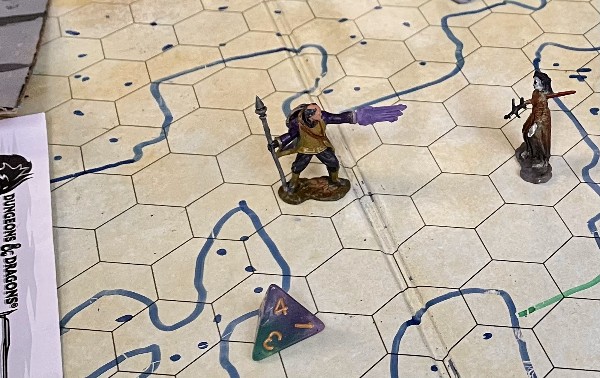
What Are the Rules for Eldritch Blast in 5e?
There are no complicated rules for Eldritch Blast itself, but there are some interactions with other spells, features, and Invocations that are worth clearing up:
-
Each beam is a separate attack. You roll damage for each beam independently. You do not roll 1d10 once and multiply it. This increases your chances of scoring a Critical Hit.
-
The Spell Sniper feat does stack with the Eldritch Spear Invocation, increasing the spell’s range by 60 feet. For multiclassers with at least three levels in Sorcerer, you can also apply Distant Spell for an insanely huge range.
-
With the exception of Grasp of Hadar and Lance of Lethargy, each invocation applies to each Eldritch Blast beam. For example, you could push one creature 40 feet away from you in a straight line with Repelling Blast, or push 4 different creatures 10 feet away each (assuming each beam hits, of course).
Grasp of Hadar and Lance of Lethargy are the two invocations that explicitly state they can only be used once per turn.
-
Multiple Eldritch Blast attacks don’t happen simultaneously. Even though it’s an instantaneous spell, “you choose the targets and resolve the attacks consecutively, not all at once,” according to the Sage Advice Compendium.
You’re still allowed to “declare all your targets before many any attacks, but you would still roll separately for each attack.”
-
Eldritch Blast cannot be Twinned. The 2024 Twinned Spell Metamagic has been completely redesigned to only work on spells that can be upcast to target an additional creature (like Charm Person). Eldritch Blast does not use spell slots and therefore does not qualify for the new Twinned Spell rules.
Is Eldritch Blast 5e a Good Spell?
Yes, Eldritch Blast is undeniably the best damaging cantrip in DnD 5e (and 5.5e). Here are the top reasons why Eldritch Blast is so good
-
It’s a cantrip. Unlimited uses of a 120-foot range, 1d10 attack is incredibly powerful. Fire Bolt offers the same damage and range, but with fire damage, which many more enemies are resistant or immune to. The consistent damage of Eldritch Blast ensures that a Warlock will always deal the most damage in situations where spell slots are right.
-
It involves multiple discrete bolts. The difference in upcast between Fire Bolt and Eldritch Blast is where the big power difference starts to emerge. While Fire Bolt’s total damage remains on par with Eldritch Blast, you only make one attack — if it misses, you do no damage.
Plus, each strike of Eldritch Blast can be a critical strike, opening up even more damage potential. And while spreading damage isn’t usually optimal, the ability to push multiple foes into hazardous terrain or off a cliff is fantastic.
-
Almost nothing resists force damage. Force damage is one of the least common resistances and immunities in the game.
-
Only requires one hand. No one-handed martial weapons deal 1d10 or more damage, and the only ranged weapon that offers that great of damage is a cumbersome Heavy Crossbow.
Invocation potential. This is why Eldritch Blast is in a league of its own as far as cantrips go. Agonizing Blast, in particular, ensures steady damage by always adding your Charisma modifier to the spell’s damage. That damage gets tacked onto each and every beam, multiplying the Invocation’s effect each time the spell levels up.
Being able to push an enemy 10-40 feet away in one turn with Repelling Blast is also incredibly powerful and basically ensures that your target won’t be able to get involved in the fight. Lance of Lethargy offers a similar effect, and when stacked with Repelling Blast, you’re basically Spiderman webbing a foe to the nearest wall.
In short, Eldritch Blast is already a top-tier cantrip at level 1. Its ability to scale with levels and invocations means that it’s your go-to damaging ability throughout the game. Which is good, because Warlocks don’t have many spell slots to work on, meaning they’re the most cantrip-reliant spellcaster in DnD 5e.
If you’d like to see just how Eldritch Blast stacks up against other top-notch cantrips in 5e, check out Dungeons and Dave’s article comparing it to Fire Bolt, Sacred Flame, and Toll the Dead. Also, check out the rest of his blog while you’re there!
DnD 5e Eldritch Blast FAQ
-
Does Spell Sniper work with Eldritch Blast in 2024? Yes. The 2024 version of the Spell Sniper feat allows you to ignore Half Cover and Three-Quarters Cover. It also increases the range of attack-roll spells by 60 feet (bringing Eldritch Blast to 180 feet).
-
Can I target objects with Eldritch Blast? Yes. The 2024 Player’s Handbook explicitly states the target can be a “creature or object”.
-
Does Eldritch Spear stack with Spell Sniper? Yes. Eldritch Spear increases the base range by 30 feet × your Warlock Level. Spell Sniper adds a flat 60 feet. At level 5, your range would be 120 (Base) + 150 (Spear) + 60 (Sniper) = 330 feet. The Distant Spell metamagic could double that to 660 feet.
-
Can I take Eldritch Blast with Magic Initiate? No. In the 2024 rules, the Magic Initiate feat only allows you to choose cantrips from the Cleric, Druid, or Wizard spell lists. To get Eldritch Blast, you must be a Warlock or Multiclass into Warlock.
2014 Eldritch Blast (Legacy Version)
The text below covers the version of Eldritch Blast found in the 2014 Player’s Handbook. I have preserved this section for players running legacy campaigns or using older modules that haven’t updated to the 2024 rule set.
If you are playing with the 2024 rules, use the guide at the top of this page.
A beam of crackling energy streaks toward a creature within range. Make a ranged spell attack against the target. On a hit, the target takes 1d10 force damage.
The spell creates more than one beam when you reach higher levels: two beams at 5th level, three beams at 11th level, and four beams at 17th level. You can direct the beams at the same target or at different ones. Make a separate attack roll for each beam.
Casting Time: 1 action
Range: 120 feet
Components: V, S
Duration: Instantaneous
School: Evocation cantrip

Matt Zane
Author, DnD Lounge