Guided by a flash of magical insight, you make one attack with the weapon used in the spell’s casting. The attack uses your spellcasting ability for the attack and damage rolls instead of using Strength or Dexterity. If the attack deals damage, it can be Radiant damage or the weapon’s normal damage type (your choice).
Cantrip Upgrade. Whether you deal Radiant damage or the weapon’s normal damage type, the attack deals extra Radiant damage when you reach levels 5 (1d6), 11 (2d6), and 17 (3d6).
Casting Time: Action
Range: Self
Components: S
Duration: Instantaneous
School: Divination Cantrip
Player’s Handbook 2024, pg. 336
Who can cast True Strike? Artificers, Bards, Sorcerers, Warlocks, and Wizards have True Strike on their class spell lists.
| Category | Score |
|---|---|
| Combat Rating | 10/10 |
| Exploration Rating | 1/10 |
| Social Rating | 1/10 |
| Raw Power | 10/10 |
| Versatility | 7/10 |
| Efficiency | 8/10 |
| Upcast Scaling | 8/10 |
True Strike 5e
Once widely regarded as the worst spell in the fifth edition of Dungeons and Dragons, True Strike has become one of the best cantrips in the 2024 version of the game. Let’s take a look at why.
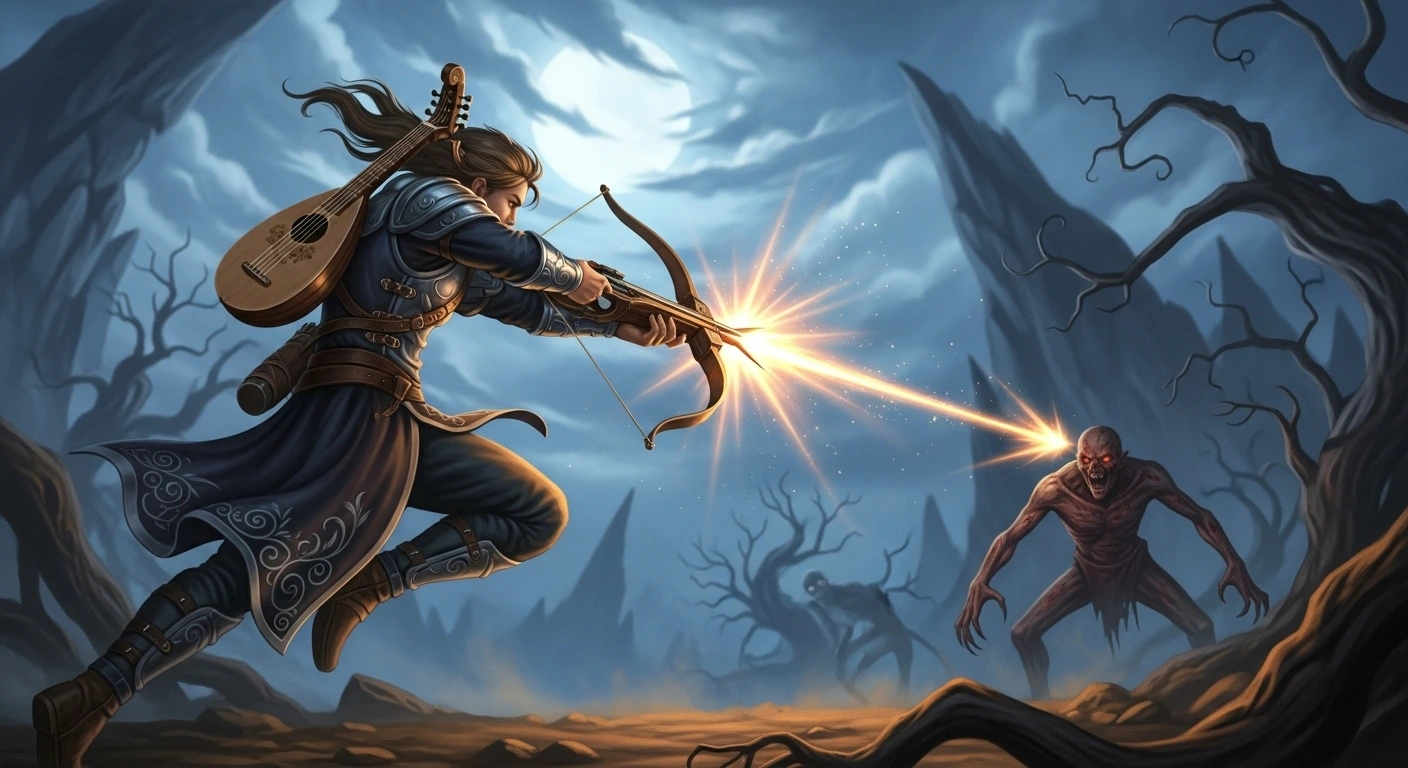
What Does True Strike Do in 5e (2024)?
In the 2024 rules, True Strike allows you to make a weapon attack using your Spellcasting Ability modifier (Intelligence, Wisdom, or Charisma) instead of Strength or Dexterity. The attack deals the weapon’s normal damage, and you can choose to deal the weapon’s normal damage type or Radiant damage instead. As you level up, the spell adds extra Radiant damage to the hit (1d6 at level 5, 2d6 at level 11, and 3d6 at level 17).
How did True Strike change in the 2024 PHB?
True Strike was completely reworked in the 2024 Player’s Handbook. In the 2014 rules, it used an action to grant advantage on your next turn, making it mathematically inefficient. In the 2024 update, it is now a weapon attack cantrip (similar to Booming Blade or Green-Flame Blade).
Now, when you cast True Strike, you make a weapon attack immediately as part of the casting. Crucially, you use your spellcasting ability for the attack and damage rolls instead of Strength or Dexterity, and the damage type becomes radiant (if you want). This effectively allows classes like the Wizard, Sorcerer, and Bard to be effective with weapons without investing in physical ability scores.
Spell Rating: True Strike
Overall: ⚔️ S-Tier (Gish Essential)
Contextual Performance (1-10)
-
Combat: 10/10. This should be your primary attack Cantrip from Level 1 through Level 10. A Light Crossbow empowered by True Strike consistently provides better range and higher damage potential than other cantrips. Even after cantrips scale at Level 5 (assuming a +4 Spellcasting Modifier), a True Strike crossbow shot deals an average of 12 damage, statistically beating the 11 average damage of d10-based options like Fire Bolt.
Here’s a breakdown comparing True Strike with Fire Bolt from levels 1 to 16:
Damage Comparison: True Strike (Crossbow) vs. Fire Bolt
Level Range Spell Formula Min/Max Average Lvl 1–4
(+3 Mod)True Strike 1d8 + 3 4 – 11 7.5 Fire Bolt 1d10 1 – 10 5.5 Lvl 5–10
(+4 Mod)True Strike 1d8 + 1d6 + 4 6 – 18 12 Fire Bolt 2d10 2 – 20 11 Lvl 11–16
(+5 Mod)True Strike 1d8 + 2d6 + 5 8 – 25 16.5 Fire Bolt 3d10 3 – 30 16.5 This is now the gold standard for spellcasters who want to use weapons (and, sadly, from a roleplaying perspective, even those who don’t want to use weapons).
- Exploration: 1/10. It has no utility outside of hitting things.
- Social: 1/10. Casting a spell to hit someone is generally considered an act of aggression.
Core Metrics (1-10)
- Raw Power: 10/10. At level 1, your damage depends entirely on your gear. Most casters start with a Quarterstaff (1d6 or 1d8 two-handed) or Daggers (1d4). However, since you have Simple Weapon Proficiency, you should prioritize buying a Light Crossbow (1d8) immediately. This bumps your average damage from 5.5 (Dagger) to 7.5 (Crossbow) purely based on the weapon die (assuming you have +3 in your main ability). That outstrips any d8 cantrip, and normalizes your damage (and raises your damage floor) because you can add your ability modifier to the damage roll.
- Versatility: 7/10. The ability to switch damage to radiant is nice for overcoming resistances or taking advantage of vulnerabilities. And if the target is vulnerable to the physical damage your weapon deals, you can keep the base damage that type (although the bonus damage at higher levels must be radiant).
- Efficiency: 8/10. As a cantrip, it costs zero resources. Bladesingers and Swords or Valor Bards can use it and a weapon attack with Extra Attack at level 6, and Eldritch Knights can cast it and make a weapon attack once they’re level 7 (War Magic).
- Upcast Scaling: 8/10. The scaling (adding d6s of radiant damage) creates a smooth damage curve that keeps the cantrip relevant from level 1 to 20. However, it does allow d8 cantrips (like Fire Bolt) to start catching back up at (much) higher levels.
Playstyle and Synergy
- Playstyle: Mandatory pick for the Bladesinger Wizard, Swords or Valor Bard, War Cleric or Eldritch Knight Fighter. It allows you to dump Strength and Dexterity and focus purely on your spellcasting stat.
- Party Synergy: Low. It primarily buffs the caster’s own damage output, but dealing consistent radiant damage helps the party clear undead and fiends faster.
True Strike Player Tip
The Weapon Mastery Combo
While you won’t get Weapon Mastery by default (unless you’re an Eldritch Knight Fighter), True Strike is still a weapon attack. If you gain Weapon Mastery via a Feat (Weapon Master) or a multiclass dip (like Fighter 1), you can apply those properties to this spell. A Wizard with a Light Crossbow and the Weapon Master feat could cast True Strike, use Intelligence to hit, deal radiant damage, and trigger the Slow property to reduce the enemy’s speed— by 10 feet – all in one action.
What Are the Rules for True Strike in 5e?
The rules for True Strike in the 2024 Player’s Handbook are as follows:
-
It is a Weapon Attack. Unlike Fire Bolt (which is a spell attack), True Strike makes a weapon attack. This means it triggers effects that require a weapon hit, but it does not trigger features that require the “Attack Action” (unless you are a Bladesinger or Eldritch Knight, who have specific features to bypass this).
-
Range depends on the weapon. The spell has a range of “Self,” but the attack uses the weapon’s range. If you use a Light Crossbow, you can hit targets 80/320 feet away. If you use a Dagger, it is 20/60 feet.
-
Radiant Damage is optional (for the base damage). You can choose to deal the weapon’s normal damage type (Bludgeoning, Piercing, Slashing) or Radiant. However, the scaling 1d6 damage must be Radiant.

How to Use True Strike in 5e
Here are the best ways to optimize True Strike in the 2024 rules:
-
The “Sad” Wizard Fix. Previously, Wizards and Sorcerers needed Dexterity to hit anything with a weapon. Now, you can use your Intelligence or Charisma. This means you can leave your Dexterity at 14 (for AC) and still have a +5 to hit and damage with a Light Crossbow by using your primary stat.
-
The “Gish” Enabler. Subclasses like the Valor Bard or War Domain Cleric often struggle because they need Strength/Dexterity to attack but Wisdom/Charisma to cast. True Strike solves this “Multiple Ability Score Dependence” (MAD) by letting you attack with your spellcasting stat from day one.
-
Weapon Mastery Synergies. If you obtain Weapon Mastery (via a Feat or Multiclass), it applies to the True Strike attack. Using a Light Crossbow with the Slow property allows you to deal Radiant damage and reduce the enemy’s speed by 10 feet in a single action.
Is True Strike 5e a Good Spell?
Yes, True Strike is now an S-Tier cantrip.
In the 2014 rules, True Strike was widely considered the “worst spell in the game” because it wasted a turn to give advantage on the next turn. That version is dead.
The 2024 version is a mathematically superior option to standard cantrips for Tier 1 and Tier 2 play. It offers higher average damage (Weapon Die + Modifier) than almost any other cantrip available to Wizards, Sorcerers, and Bards. Warlocks are still better off using Eldritch Blast, though.
The only downside is that it requires you to hold a weapon, which might conflict with holding a Spellcasting Focus unless you manage your hands carefully (or use a component pouch/Quarterstaff focus).
DnD 5e True Strike FAQ (2024 Rules)
-
Does True Strike still grant advantage? No. In the 2024 rules, True Strike no longer grants advantage on your next turn. Instead, it allows you to make an immediate weapon attack using your spellcasting ability modifier.
-
Does True Strike work with Sneak Attack? Yes. The spell description states that you make a “weapon attack.” As long as the weapon you use meets the Rogue’s requirements (Finesse or Ranged) and you have advantage or an ally within 5 feet, Sneak Attack applies. This makes it an excellent pick for Arcane Tricksters.
-
Can you use True Strike with Extra Attack? Generally, no. Casting True Strike requires the “Magic” action (formerly Cast a Spell), not the “Attack” action. Therefore, it does not trigger Extra Attack.
Exceptions: The Bladesinger WizardSword Bard, Valor Bard (level 6), and Eldritch Knight Fighters (level 7) have specific features that allow them to replace one of their attacks with a cantrip.
-
Does True Strike work with ranged weapons? Yes. Even though the spell’s range is listed as “Self,” the text specifies you make an attack with the weapon used in the casting. If you use a Light Crossbow, you can attack a target within the crossbow’s normal range (80/320 feet).
-
Do you add your ability modifier to the damage? Yes. unlike most cantrips (which just deal dice damage), True Strike is a weapon attack that uses your spellcasting modifier. Therefore, you add your Intelligence, Wisdom, or Charisma modifier to the damage roll, just like a martial character adds Strength or Dexterity.
2014 True Strike (Legacy Version)
If you have played D&D for a long time, you probably remember True Strike as a running joke. In the 2014 rules, it required an Action and Concentration just to give you Advantage on your next turn. It was mathematically worse than just attacking twice.
I have preserved the original 2014 text below for posterity (and for players in legacy campaigns), but know that the 2024 version above has fully redeemed this spell.
You point a finger at a target in range. Your magic grants you a brief insight into the target’s defenses. On your next turn, you gain advantage on your first attack roll against the target, provided that this spell hasn’t ended.
Casting Time: 1 action
Range: 30 feet
Components: S
Duration: Concentration, up to 1 round
School: Divination cantrip
How Other Divination Spells Work in DnD 5e
Guidance DnD 5e
Detect Magic DnD 5e
Hunter’s Mark DnD 5e
Identify DnD 5e
Speak with Animals DnD 5e
Detect Thoughts DnD 5e
Mind Spike DnD 5e

Matt Zane
Author, DnD Lounge